AIKIRO Coding Robot – Levels 1–2
ROBOROBOIn stock

AIKIRO Coding Robot – Levels 1–2

An unplugged coding robot kit from ROBOROBO: children build robots with rivets and frames, then program them by tapping cards with a coding pen.

Grade levels
Grades 1–3Grades 4–5Grades 6–8
Request price

Pricing depends on quantity and configuration. Add to your quote list and we'll reply with an offer.

Order via WhatsApp

Product overview

AIKIRO is an elementary-level robotics kit from Korean educational robotics maker ROBOROBO that combines hands-on construction with screen-free coding. Students assemble robots from frames and simple one-hand rivet connectors that are quick to fit yet hold firmly.

Programming is done with an OID coding pen and dedicated command cards: children tap the cards to create sequences, and the robot runs them without a PC. The kit offers more than 100 card combinations and works with motors, LEDs, melody output and over 20 digital and analog sensors and controllers.

Lessons follow a story-based workbook with three main characters and everyday robot scenarios. As they build the workbook models and then design their own, students learn basic mechanical principles and foundational coding algorithms, making AIKIRO a practical first step into robotics for primary classrooms.

Key features

  • Screen-free coding with OID pen and cards
  • 100+ coding card combinations
  • One-hand rivet and frame construction
  • 20+ sensors and controllers supported
  • Motors, LEDs and melody output
  • Story-based workbook with everyday scenarios
View on the official website

Related products

  • Grades 1–3Grades 4–5Grades 6–8

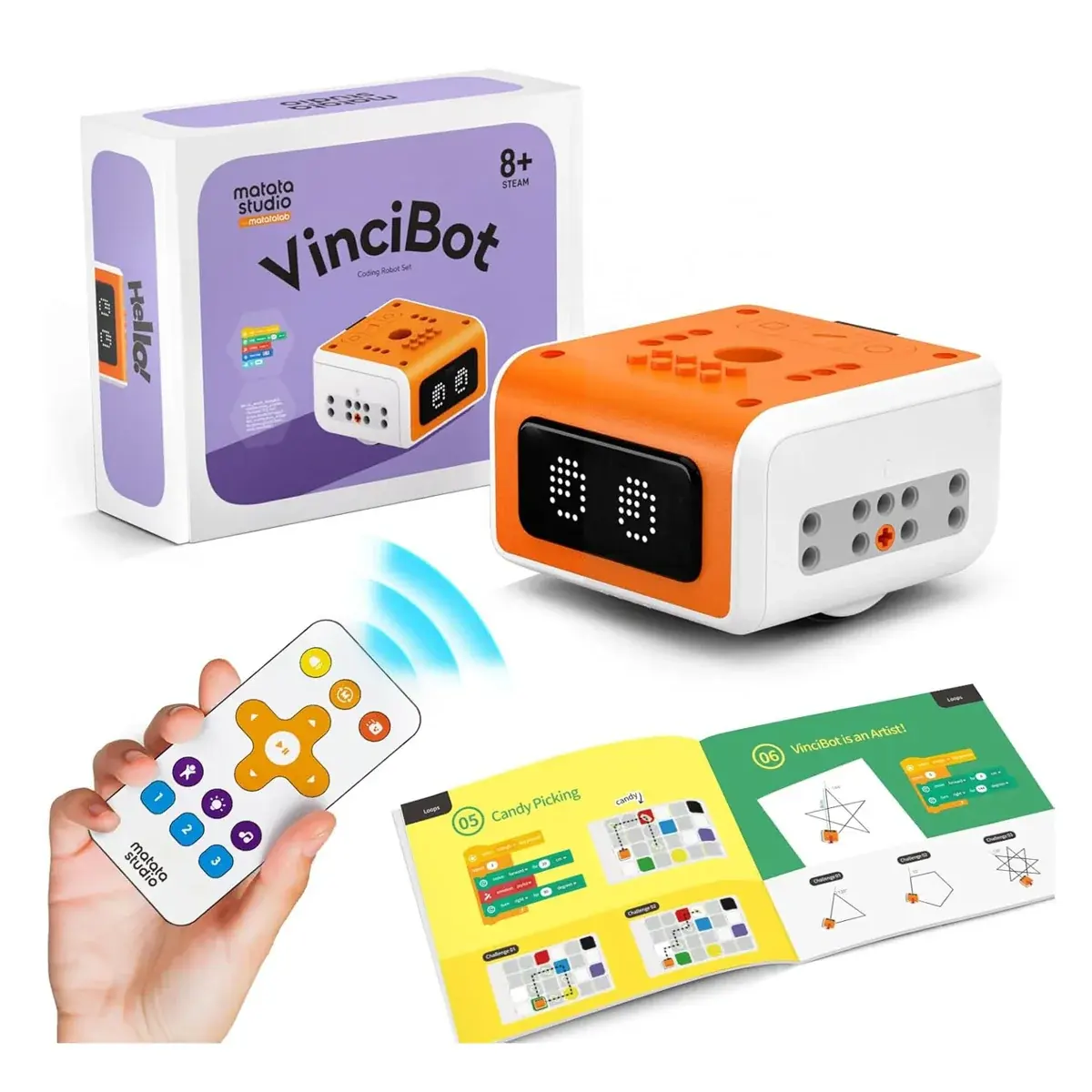
    VinciBot Coding Robot

    VinciBot is a coding robot from MatataStudio for primary and lower secondary students. Learners start with visual block coding in MatataCode and can move on to Python as their skills develop, using Windows, macOS, iOS or Android devices. The robot has eight built-in sensors, including distance, color, light, sound, infrared and line-following sensing, along with a 128-LED matrix face, programmable RGB lights, a speaker with 21 instrument sounds and precise dual motors. A marker holder lets students program the robot to draw shapes, and it is compatible with LEGO bricks and Technic motors for building projects. The set includes the VinciBot robot, an IR remote control, a washable marker, a USB-C cable, a user guide, an 18-activity challenge booklet and a double-sided map with blank and line-following sides. The rechargeable 1500 mAh battery gives four or more hours of use. Creator, Inventor and AI Vision kits extend VinciBot into engineering, electronics and artificial intelligence projects.
  • Grades 1–3Grades 4–5Grades 6–8

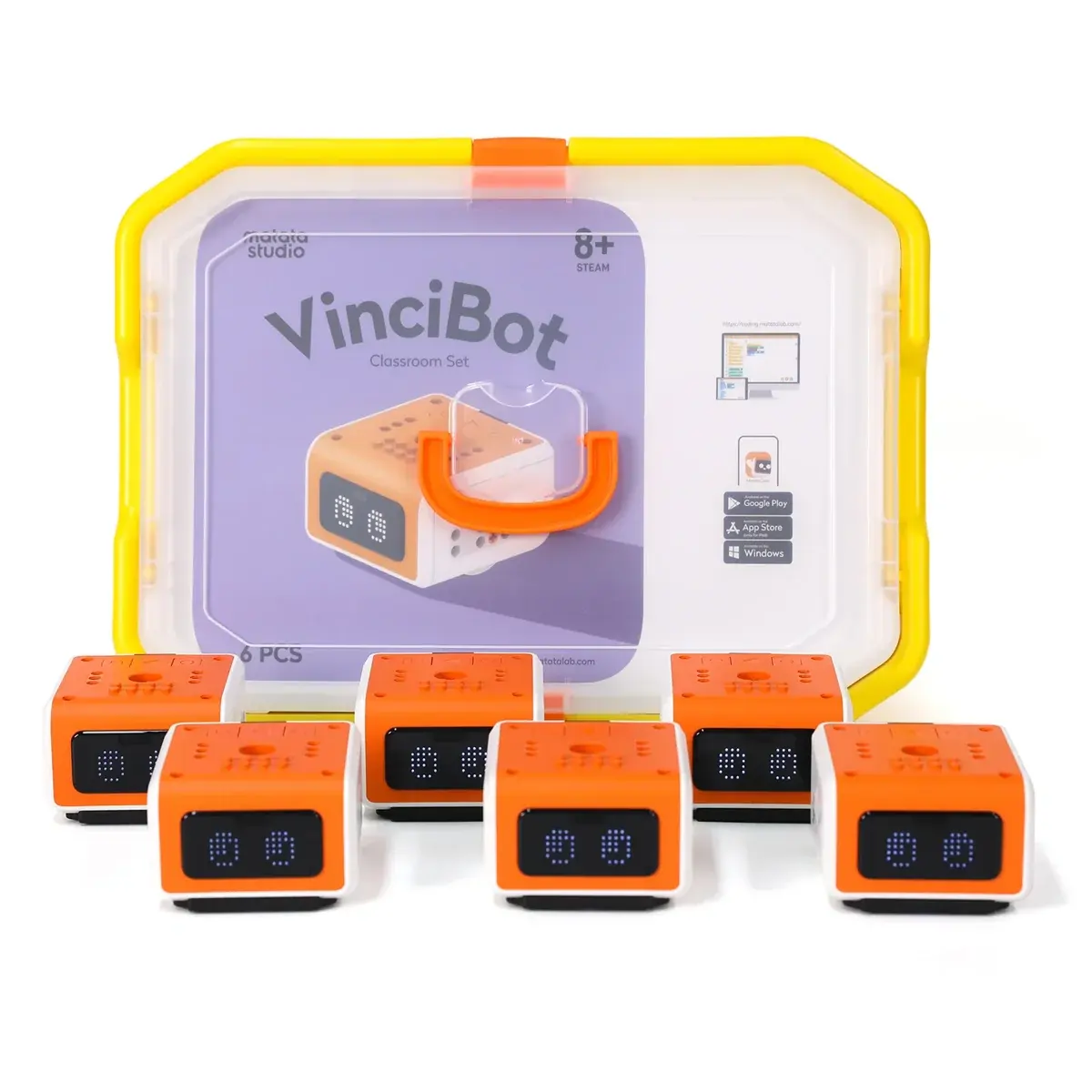
    VinciBot Classroom Set – 6 robots + charging stations

    The VinciBot Classroom Set equips a class with six VinciBot robots so students can work in pairs or small groups to plan, program, test and improve their ideas. It is built for coding stations, team challenges and collaborative projects, with charging stations to keep the robots ready between lessons. Each VinciBot supports visual block programming and Python, so the same robots serve beginners and more advanced learners. The robots include eight built-in sensors such as distance, color, light, sound, infrared and line-following, a 128-LED matrix, 21 instrument sounds and a marker holder for programmed drawing, and they work with LEGO bricks and third-party modules. The set comes with markers, cables and accessories as well as structured teaching materials that guide students from step-by-step activities to more open-ended STEAM projects. Each robot's 1500 mAh battery charges in about two hours and runs for four hours or more.

  • Grades 1–3Grades 4–5Grades 6–8

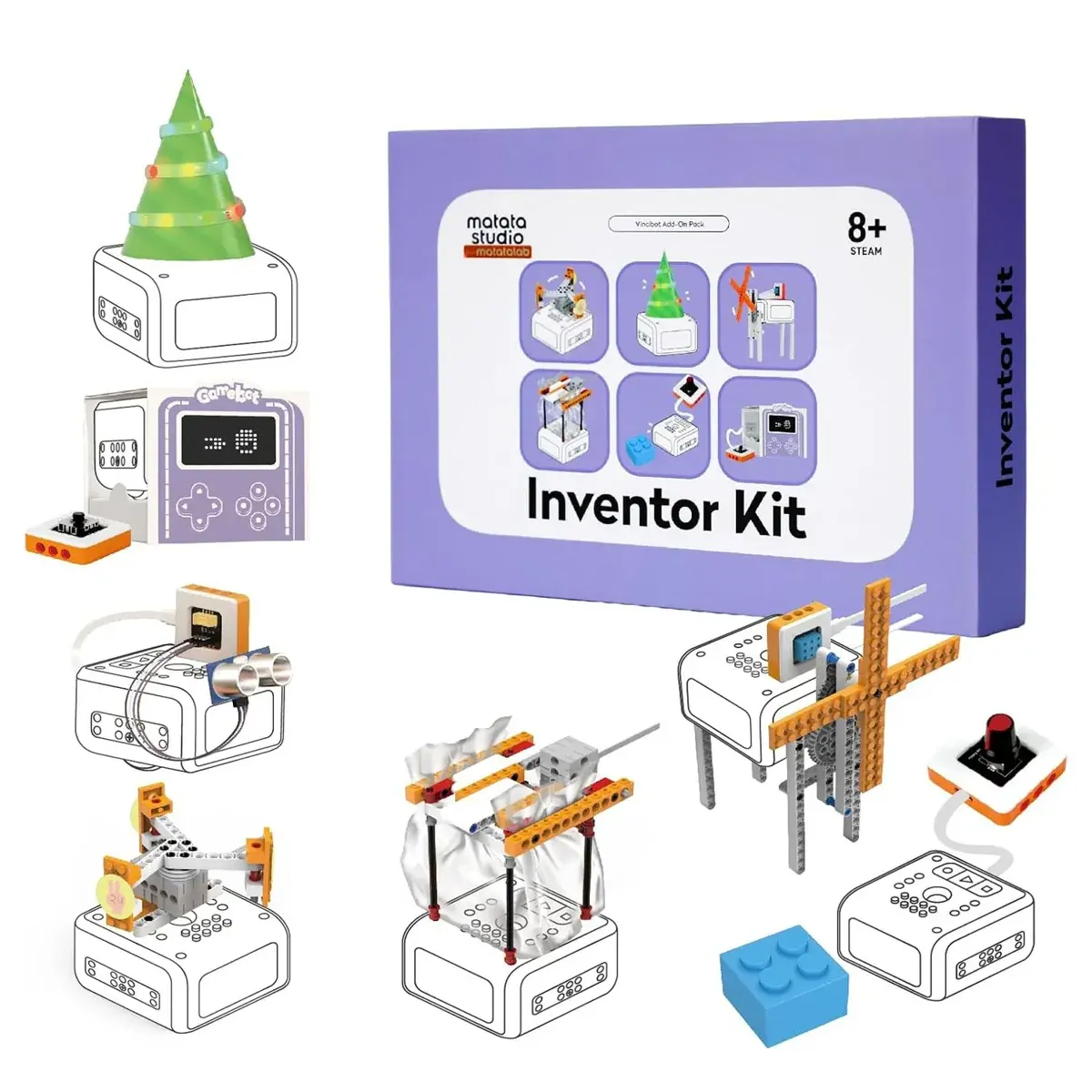
    VinciBot Inventor Kit add-on

    The Inventor Kit is an electronics and engineering add-on that expands what students can create with VinciBot. By connecting programmable modules to the robot, learners design interactive projects that sense their surroundings, respond with light and movement, and can be controlled by hand. The kit includes five programmable modules: a 360-degree digital servo, a temperature and humidity sensor, an LED strip, a rotary angle sensor and a joystick. A Module Link Unit allows compatible third-party sensors and DC motors to be connected, and 128 building bricks are provided for constructing the physical parts of each project. Seven guided projects with step-by-step instructions help students get started before moving on to their own inventions, building skills in electronics, coding, engineering and design thinking. The kit is an expansion only and requires a VinciBot robot, which is sold separately.

  • Grades 1–3Grades 4–5Grades 6–8

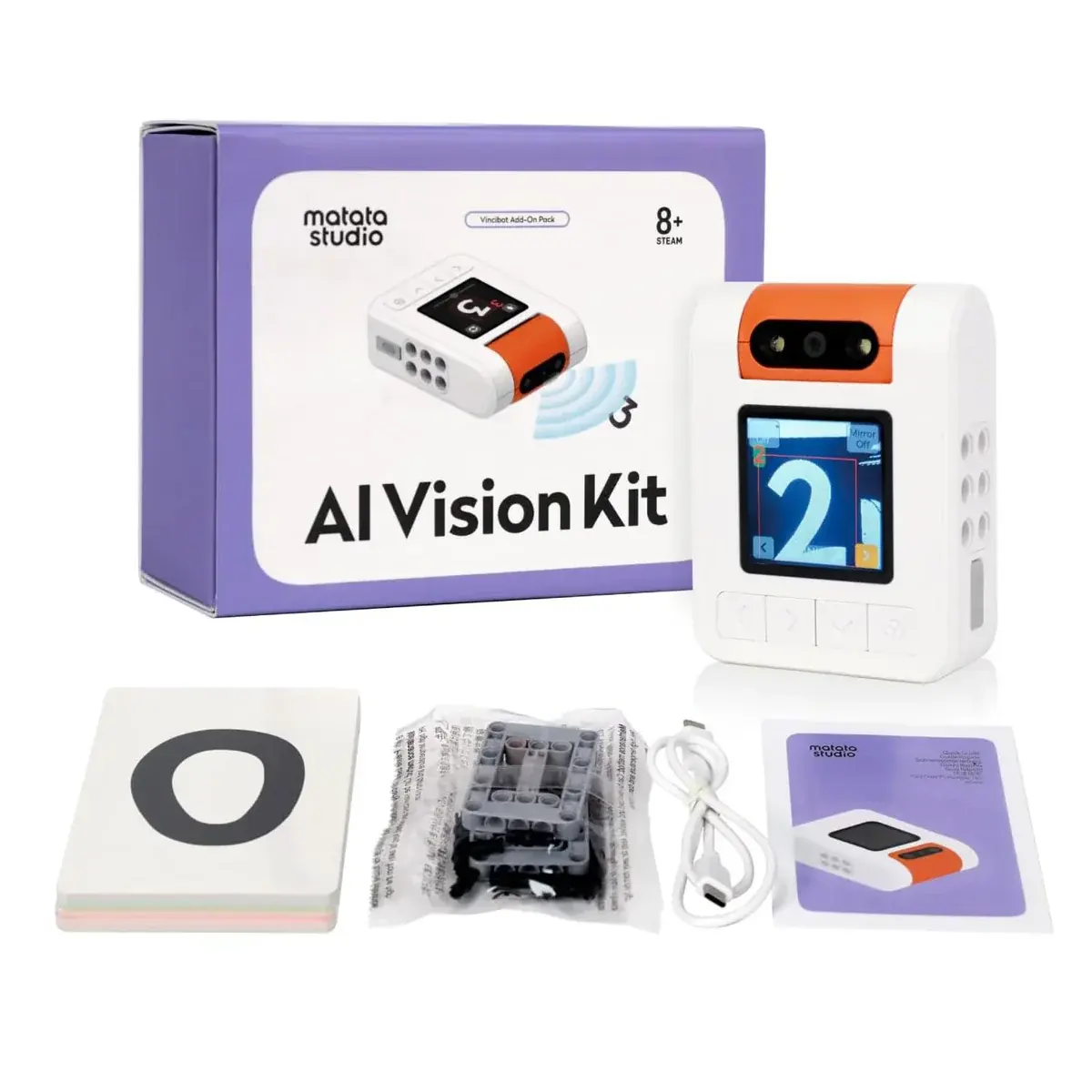
    VinciBot AI Vision Kit add-on

    The AI Vision Kit adds computer vision and artificial intelligence to the VinciBot coding robot. Students attach the camera module and use graphical programming to explore how machines recognise, track and respond to what they see. The module offers five preset AI functions: face detection, color recognition, color line following, AprilTag detection and recognition of handwritten digits from 0 to 9. A one-click data collection and training feature lets learners build their own recognition models, giving a practical introduction to how AI models are trained. A 1.5-inch full-colour LCD screen and flippable camera show live feedback during projects. The kit includes the AI Vision module with camera, six activity cards for guided experiments and a USB-C cable. It is an add-on that works only with VinciBot, which is sold separately, and suits classroom units on AI literacy and STEAM projects.