Cosmic Coding Board Game
GaltIn stock

Cosmic Coding Board Game

A space-themed board game that introduces coding concepts as players use movement cards to fly rockets, collect stars and dodge hazards.

Age
⁦6+⁩ years
Grade levels
KGGrades 1–3Grades 4–5
Request price

Pricing depends on quantity and configuration. Add to your quote list and we'll reply with an offer.

Order via WhatsApp

Product overview

Cosmic Coding from Galt is a board game that introduces children to coding without a screen. Players pilot rockets around outer space using movement cards, collecting stars while avoiding black holes and star-stealing aliens, and the first to complete their mission wins.

Planning a route with movement cards gives children practical experience of algorithms and the idea of a programming language. The game was designed to fit Key Stage 1 of the UK National Curriculum, needs no prior coding knowledge, and comes with a full guide.

The set includes a game board, 4 plastic rocket counters, 36 movement cards, 20 star cards, 8 mission cards and the guide. It is a straightforward way for teachers to introduce computing vocabulary and sequencing to small groups in early-primary classrooms.

Key features

  • Screen-free introduction to algorithms
  • Space theme with stars, black holes and aliens
  • 36 movement cards and 8 mission cards
  • Designed for UK Key Stage 1 computing
  • No prior coding knowledge needed
View on the official website

Related products

  • KGGrades 1–3Grades 4–5

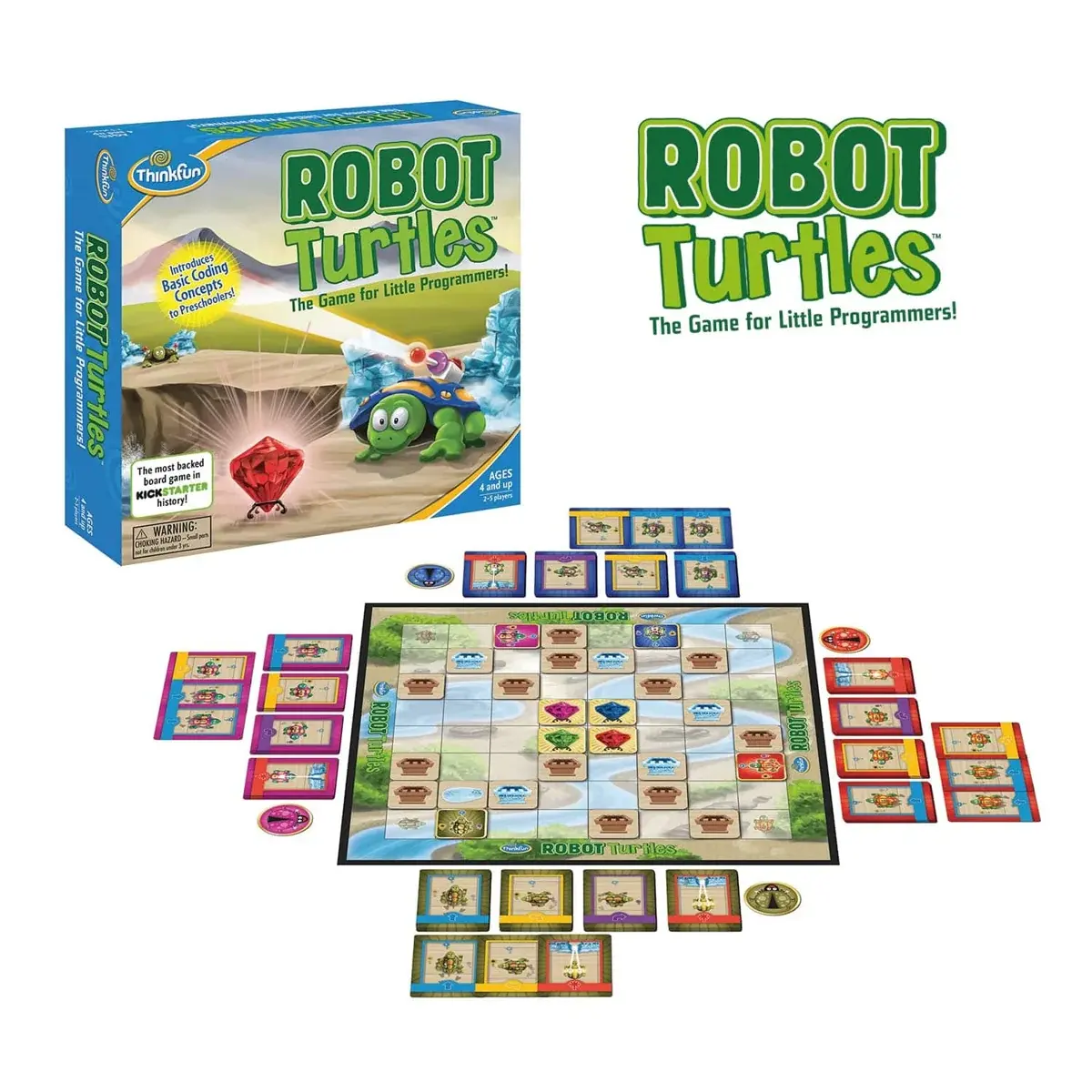
    Robot Turtles

    Robot Turtles from ThinkFun is a board game that teaches young children the fundamentals of programming without a screen. An adult or older child sets up a maze on the board, and each young player lays down code cards such as move forward, turn left and turn right to steer their turtle to a jewel. As they progress, children move from simple sequences of commands to ideas like debugging mistakes and using functions to repeat steps. The box contains a game board, 40 game tiles, 4 Robot Turtle tiles, 4 jewel tiles and 4 code card decks of 45 cards each, for two or more players. The game takes moments to learn and can be replayed with new mazes, making it a practical unplugged-coding activity for kindergarten and early-primary classrooms, where teachers can guide small groups through increasingly challenging levels.
  • Grades 1–3Grades 4–5Grades 6–8

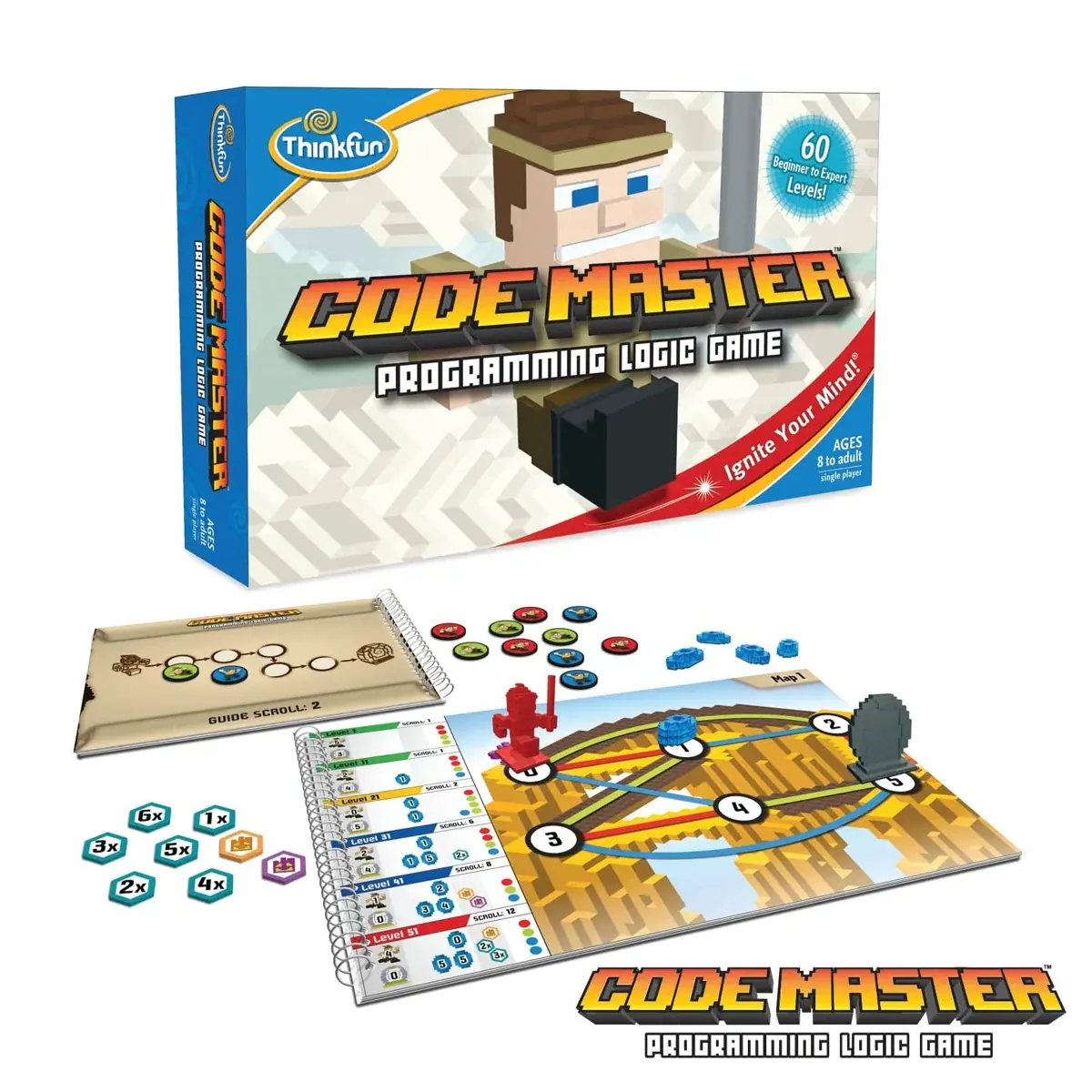
    Code Master

    Code Master from ThinkFun is a programming logic game played without a computer. The player's avatar travels across a fantasy world collecting power crystals, and in each level only one specific sequence of actions will collect every crystal and finish on the portal. Players arrange action tokens and conditional tokens into a program, then follow it step by step on the map to check whether it works. The set includes an avatar, a portal, 6 crystals, 10 maps with 60 levels, 12 guide scrolls, 12 action tokens, 8 conditional tokens, and instructions with solutions. Beyond introducing core programming ideas such as sequences and conditionals, the game builds planning, sequential reasoning and problem-solving skills. Its self-checking levels make it well suited to independent work, enrichment time or coding stations in upper-primary and middle-school classrooms.

  • Grades 1–3Grades 4–5Grades 6–8

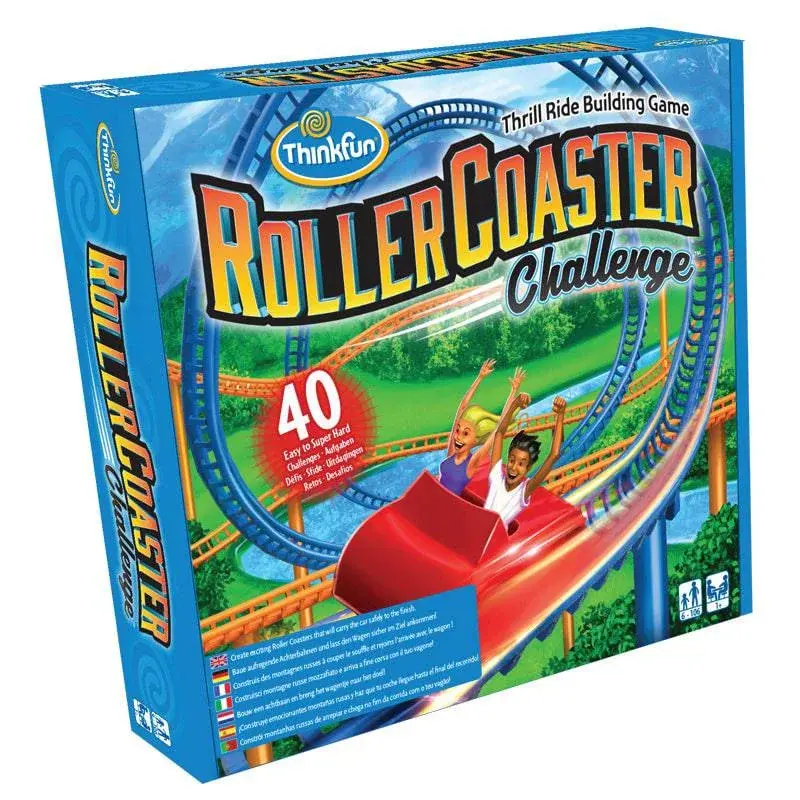
    Roller Coaster Challenge

    Roller Coaster Challenge from ThinkFun combines a marble run with a logic puzzle. Each challenge card shows how to set up part of the coaster on the game grid and which pieces are left to place; the player must work out where those pieces go so a working coaster runs from start to finish. The 40 challenges progress from Easy through Medium and Hard to Super Hard, and solutions are included. The set contains a game grid, 39 track pieces, 36 post pieces and 2 tunnels, and pieces such as the loop also allow free-form coaster building once the challenges are done. Players practise logical reasoning, critical thinking and visual-spatial planning while testing their designs with a real rolling car. It works well as a one-player activity in STEM centres or as a hands-on way to discuss height, slopes and motion with lower and upper-primary students.

  • Grades 1–3Grades 4–5Grades 6–8

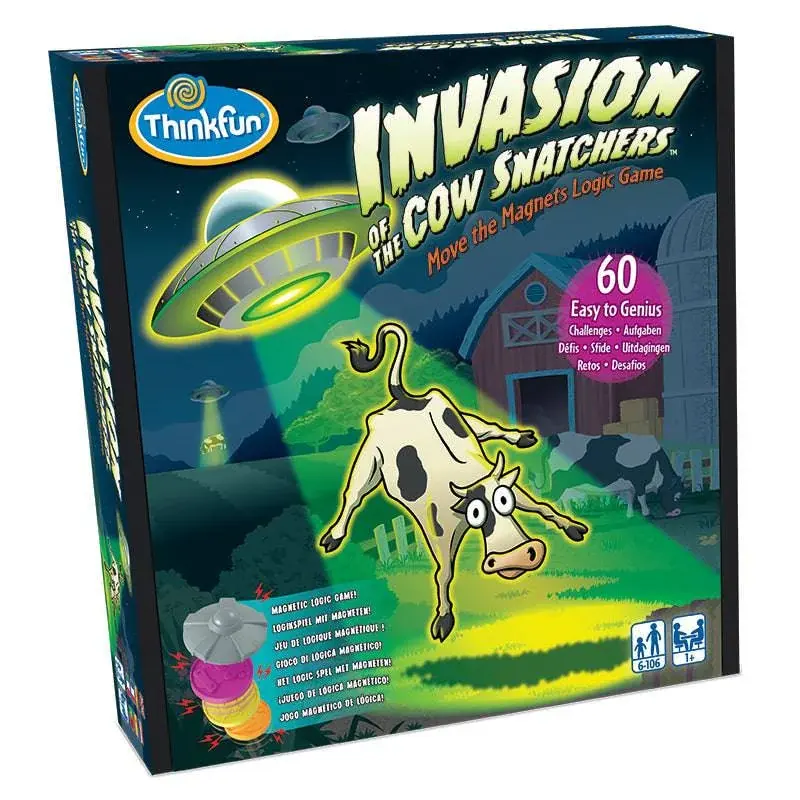
    Invasion of the Cow Snatchers

    Invasion of the Cow Snatchers from ThinkFun is a single-player magnetic logic game. Using a magnet, the player moves a UFO across a farm board, steering over and around obstacles to beam up the magnetic cows in the correct order. The game offers 60 challenges: 40 range from Easy to Super Hard for newer puzzlers, and a further 20 Genius-level challenges stretch experienced solvers. Each challenge requires players to plan a route before they move, since obstacles limit where the UFO can travel. The puzzles build sequential planning, spatial reasoning and persistence, the same habits of mind used in programming. It suits independent puzzle time, early-finisher activities or logic centres in primary classrooms.