Junior Chemistry Lab – 50 experiments
National GeographicIn stock

Junior Chemistry Lab – 50 experiments

Hands-on science kit with guided experiments for curious young scientists.

Grade levels
Grades 1–3Grades 4–5Grades 6–8
Request price

Pricing depends on quantity and configuration. Add to your quote list and we'll reply with an offer.

Order via WhatsApp

Product overview

Junior Chemistry Lab – 50 experiments by National Geographic. Hands-on science kit with guided experiments for curious young scientists. Contact us for a quotation, classroom quantities and delivery to your school.
Related products

  • Grades 1–3Grades 4–5Grades 6–8

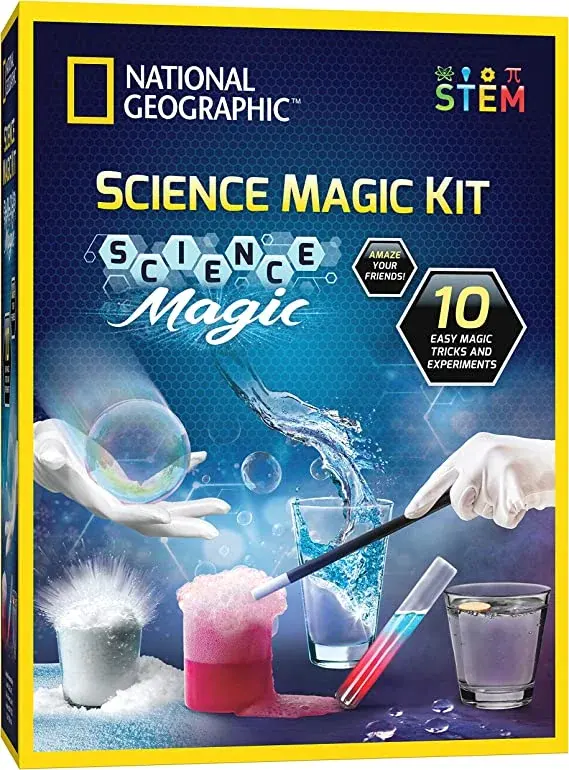
    Magic Chemistry Set

    The National Geographic Magic Chemistry Set combines science and showmanship. Students carry out 10 experiments that are each designed to be performed as a magic trick, such as making a coin float, changing the color of water and making snow appear from a powder. The kit supplies hydrophobic sand, instant snow powder, red cabbage powder, citric acid and sodium bicarbonate, along with a beaker, pipette, copper coins, clear and paper cups, pH indicator paper, cotton gloves, a magic wand and an experiment guide. There is enough material to practise each experiment once or twice before performing it for an audience. The illustrated guide gives step-by-step instructions and explains the chemistry and physics behind every effect, making the set a good fit for science clubs, enrichment sessions or a class science show where students present and explain their results.

  • Grades 1–3Grades 4–5Grades 6–8

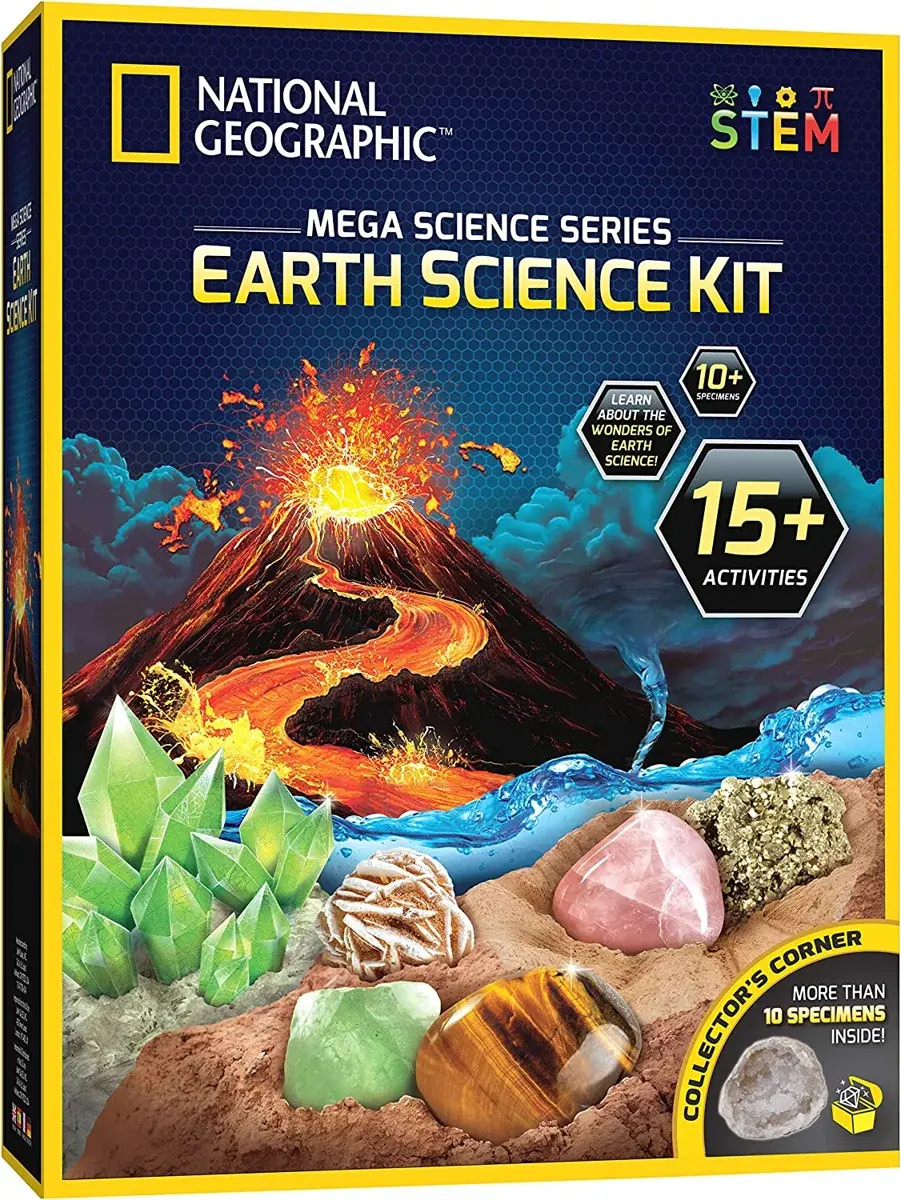
    Earth Science Mega Set

    Part of the National Geographic Mega Science Series, the Earth Science Kit brings together more than 15 hands-on activities in one box. Students grow a crystal in as little as three days, build and paint their own volcano and set off several types of eruptions, and use tornado tubes to create water vortices and race them against each other. Two dig kits let learners excavate a rose quartz specimen and pyrite specimens, while a selenite piece shows how some minerals let light pass through. A starter rock collection introduces specimens such as snowflake obsidian, tiger's eye, green fluorite, pumice, desert rose, blue calcite, agate and geodes. A full-color learning guide explains the science behind crystals, volcanoes, tornadoes and gemstones. With so many separate activities, the kit works well for group rotations, earth science units or home-school study.

  • Grades 1–3Grades 4–5Grades 6–8

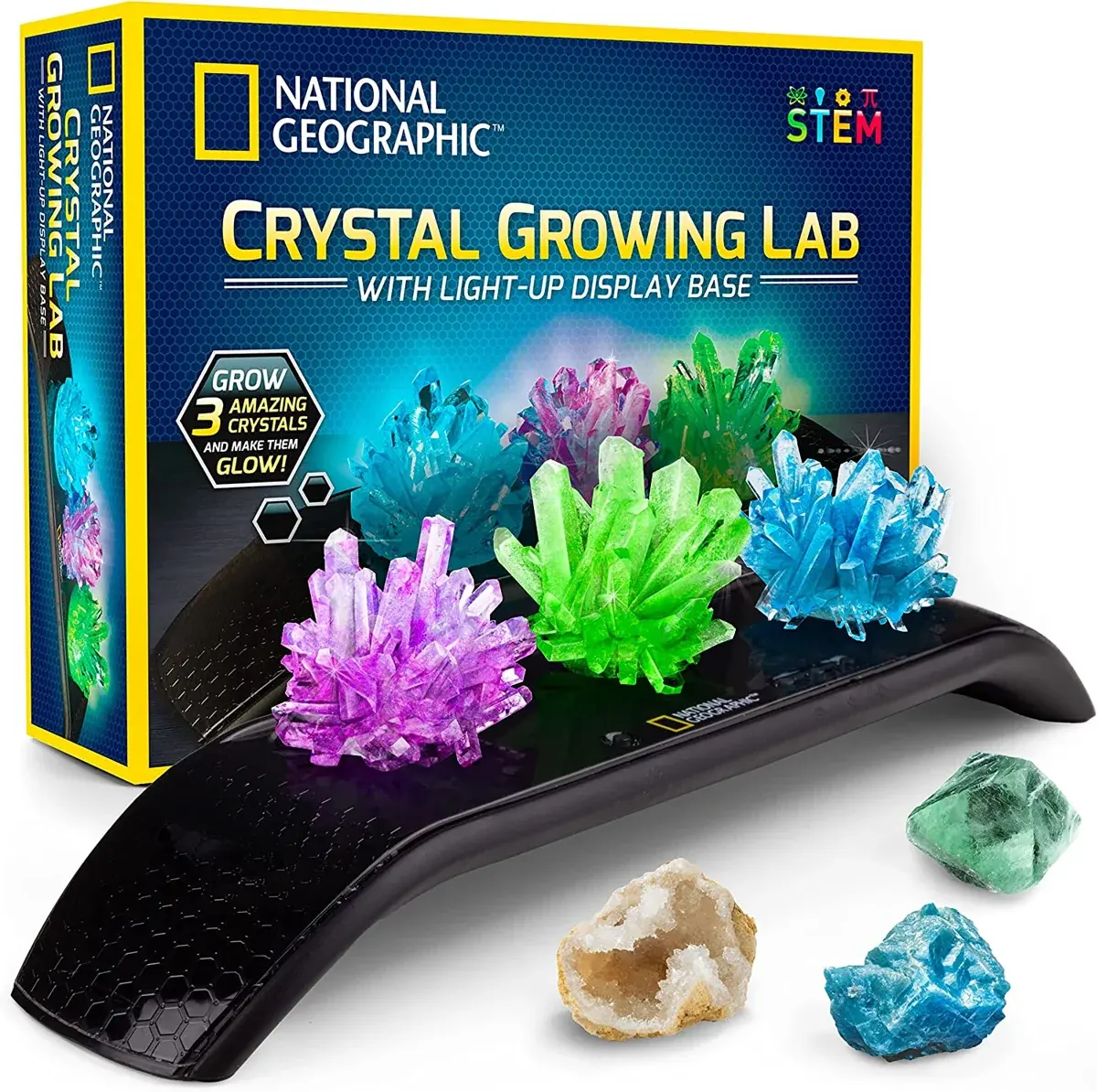
    Crystal Growing Lab with Light-Up Base

    This National Geographic crystal growing lab lets students explore crystal formation by growing crystals in six colors: red, green, blue, purple, yellow and glow-in-the-dark. The crystals develop in about three to four days, giving learners a short, observable chemistry project. The kit contains six colors of crystal growing powder, six clear seed rocks, two flexible silicone growing chambers, a wooden stirring spoon and a magnifying glass. It also includes four real specimens (rose quartz, fluorite, blue calcite and a quartz geode) and a light-up display base, connected by USB, that holds five finished crystals. A full-color STEM learning guide with instructions explains how crystals form. In class, students can record daily growth, compare results between colors and use the specimens and display base to start a small mineral collection.