Arduino & Microcontrollers

Authentic kits and components, quoted for your school. Add items to your quote list and we'll reply with pricing and delivery.

13 products

Filters

Clear all
Brand
Grade level

13 products

  • Grades 6–8Grades 9–12

    Arduino UNO Rev3

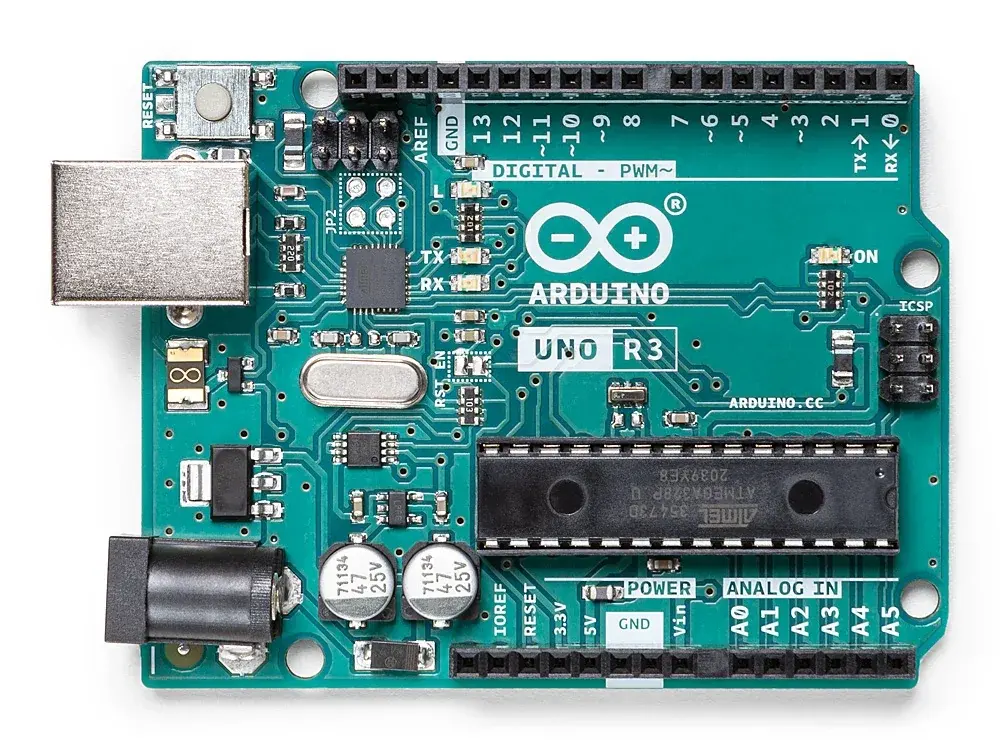
    The Arduino UNO Rev3 is the entry-level microcontroller board that most people use when they first start with Arduino. It is the most used and best documented board in the Arduino family, which means students can find a very large number of tutorials, example projects and compatible add-on shields. The board is based on the ATmega328P microcontroller running at 16 MHz with 5V logic. It provides 14 digital input/output pins, six of which support PWM, plus six analog inputs. Memory includes 32 KB of flash, 2 KB of SRAM and 1 KB of EEPROM. It can be powered over USB or from an external supply, with 7-12V recommended. In the classroom, the UNO is used to read sensors, drive LEDs, motors and displays, and introduce programming concepts through the Arduino IDE. Its standard header layout fits a wide range of shields and breadboard projects, making it a dependable foundation for electronics, physical computing and robotics lessons.
  • Grades 6–8Grades 9–12

    Arduino UNO R4 WiFi

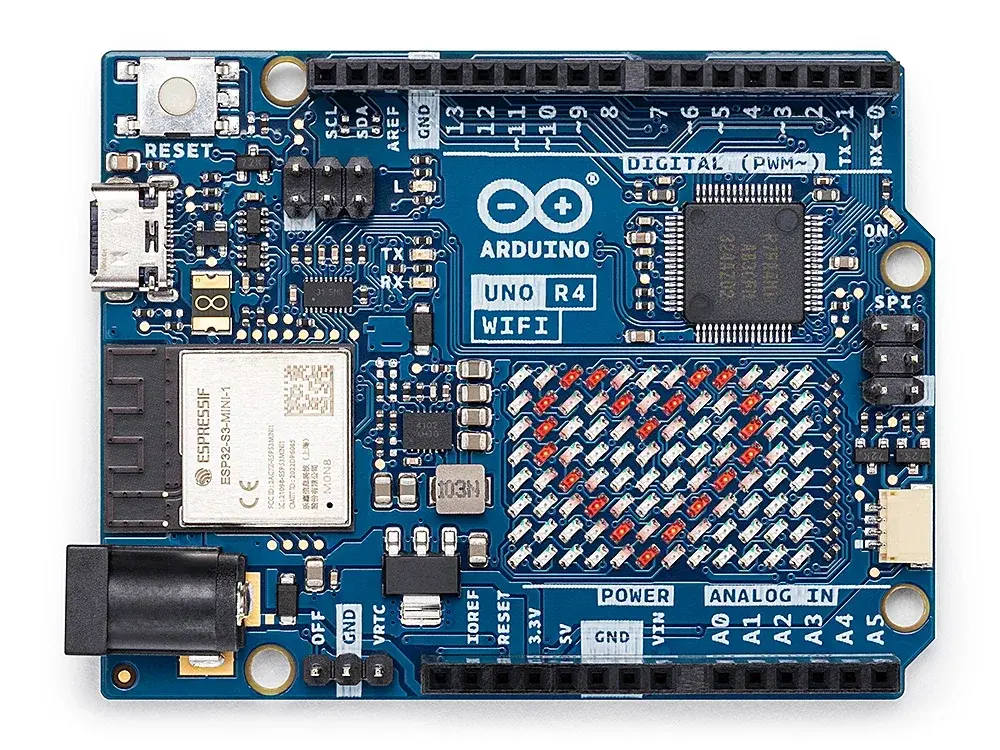
    The Arduino UNO R4 WiFi keeps the familiar UNO shape and pin layout while adding more processing power and wireless connectivity. It combines a Renesas RA4M1 Arm Cortex-M4 microcontroller running at 48 MHz with an Espressif ESP32-S3 module that handles Wi-Fi and Bluetooth, so students can build connected and Internet of Things projects. The board has 256 KB of flash and 32 KB of RAM on the main processor, 14 digital pins, six analog inputs and six PWM outputs. It supports UART, I2C, SPI and CAN, and adds a 12-bit DAC, an op-amp, a real-time clock and HID support. A 12x8 red LED matrix on the board can show icons, text and simple animations without extra parts. It uses a USB-C connector, includes a Qwiic connector, and accepts 6-24V input. Because it remains compatible with UNO shields and works with Arduino Cloud, it lets classes move from basic electronics to networked sensing and data projects on a single board.

  • Grades 6–8Grades 9–12

    Arduino Nano

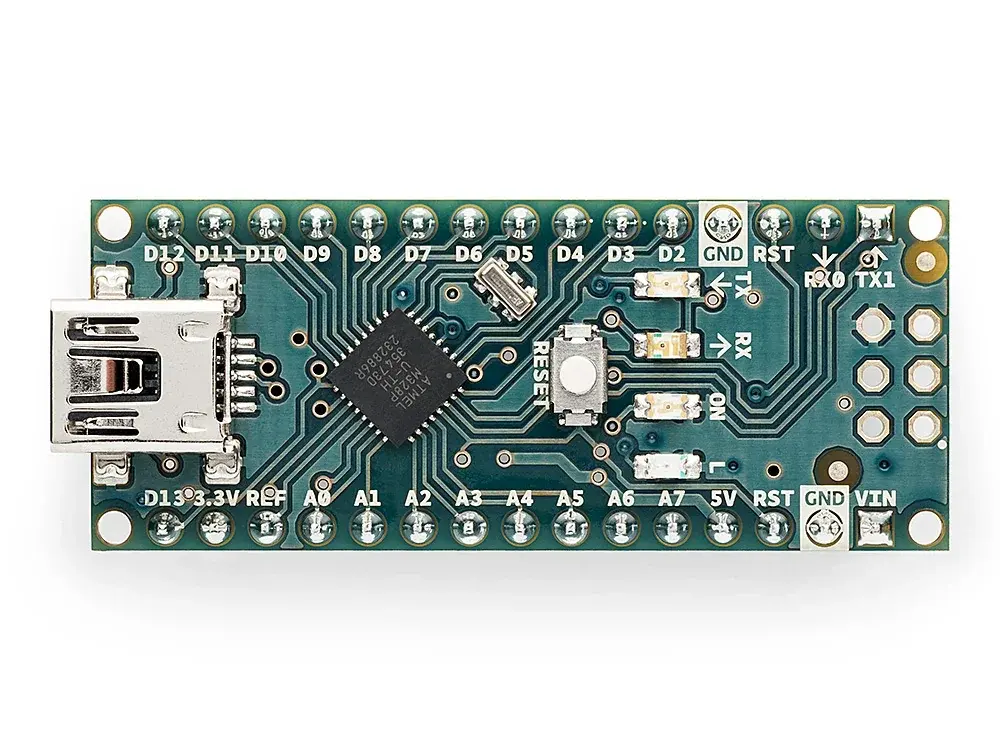
    The Arduino Nano is the smallest of the classic Arduino boards, designed to plug straight into a breadboard. It offers functionality similar to larger boards such as the UNO but in a much smaller package, which makes it a good choice for compact builds, wearable prototypes and small robots. The Nano uses the ATmega328 microcontroller at 16 MHz with 5V logic. It has 32 KB of flash memory, 2 KB of SRAM and 1 KB of EEPROM, 14 usable digital pins of which six provide PWM, and eight analog inputs. It supports I2C and SPI communication, connects to a computer through a Mini-B USB cable, and measures just 18 x 45 mm. Students program the Nano with the same Arduino IDE and code used for other Arduino boards, so skills transfer directly between projects. In class it is useful when a design needs to fit inside an enclosure or a small model, or when several boards are used together on breadboards.

  • Grades 6–8Grades 9–12

    Arduino Mega 2560 Rev3

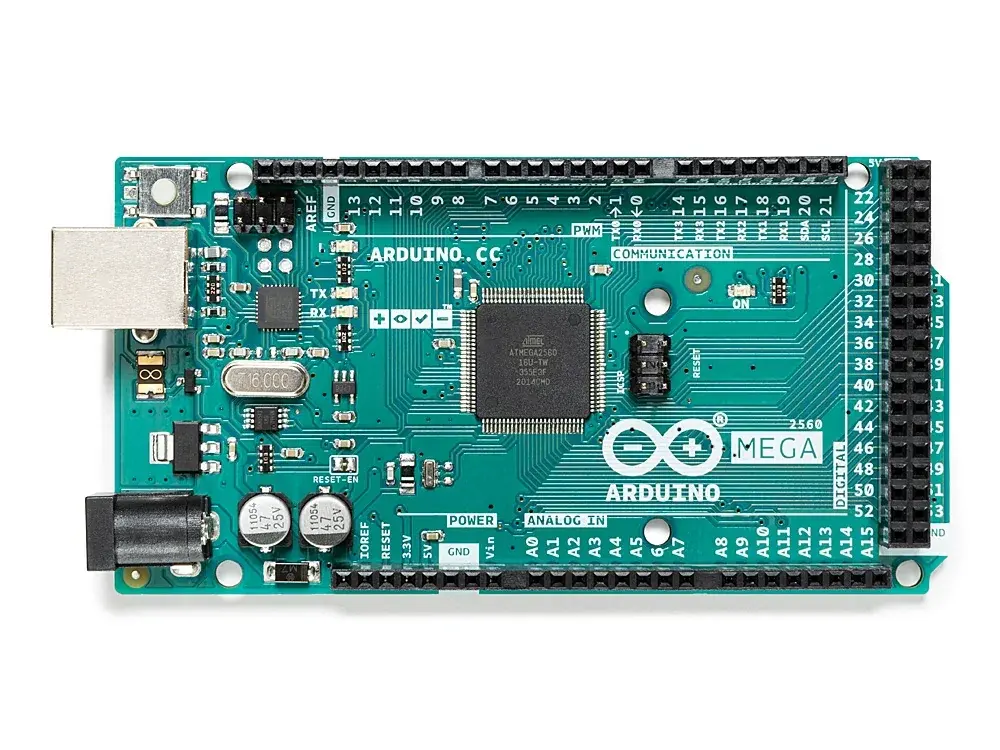
    The Arduino Mega 2560 Rev3 is designed for projects that need many more connections than a standard board can offer, such as robots with multiple motors and sensors, 3D printers or large interactive installations. It is ready to use out of the box and can be powered over USB or from an external supply. It is built on the ATmega2560 microcontroller running at 16 MHz with 5V logic. The board provides 54 digital input/output pins, 15 of which can output PWM, along with 16 analog inputs and four hardware serial ports (UARTs). Memory includes 256 KB of flash, 8 KB of SRAM and 4 KB of EEPROM, giving room for longer programs. The Mega is compatible with most shields designed for the UNO and earlier boards, so students can reuse the same accessories and Arduino IDE skills while scaling up. It is well suited to advanced classes and project teams that have outgrown the pin count or memory of smaller boards.

  • Grades 6–8Grades 9–12

    Arduino Starter Kit (Multi-language)

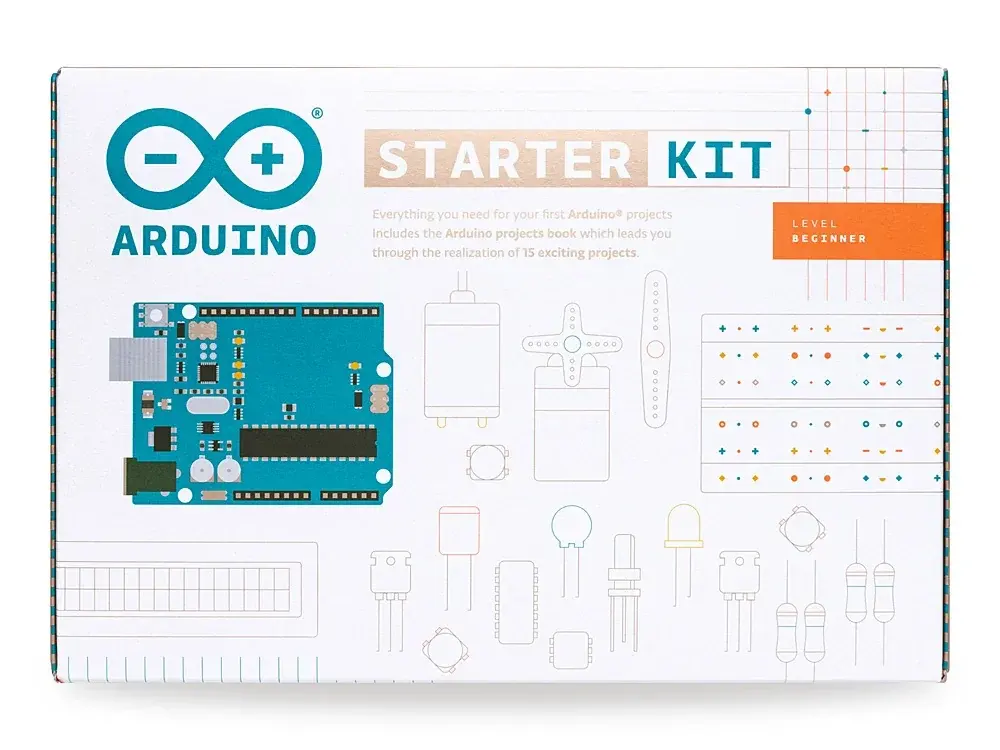
    The Arduino Starter Kit introduces coding and electronics together through hands-on projects. It is aimed at newcomers, schools and STEM programs, and walks learners through core ideas such as current, voltage and digital logic, then on to programming, sensors, actuators and signal processing. A printed projects book of about 170 pages guides students through 15 projects, starting with getting to know the tools and progressing to builds such as touch-responsive devices and controlling a computer from the board. The kit is available in several language editions, including Arabic. Inside the box are an Arduino UNO board with a USB cable, a 400-point breadboard, a wooden base, jumper wires and a 9V battery snap. Components include LEDs, resistors, capacitors, diodes, transistors, potentiometers, pushbuttons, a temperature sensor, phototransistors, a tilt sensor, a 16x2 LCD, a DC motor, a servo, a piezo and a motor driver. Everything needed to complete the book's projects is included, making it a ready-made unit for introductory electronics classes.

  • Grades 6–8Grades 9–12

    Arduino Student Kit

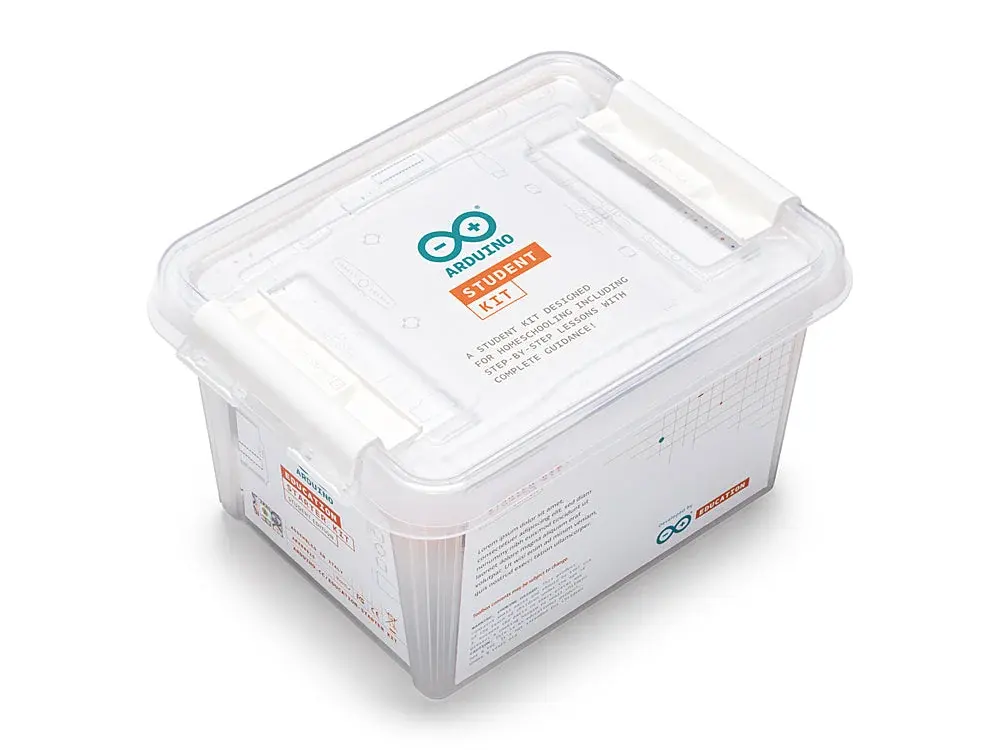
    The Arduino Student Kit lets learners explore the basics of electronics, programming and coding with no prior knowledge needed. It was designed to work for teachers running remote or hybrid classes, for homeschooling families and for students learning on their own, with each kit giving one learner everything required. The course consists of nine lessons of about 90 minutes each plus two open-ended projects. Lessons build on one another and include step-by-step instructions, concept-checking exercises, a digital logbook and short features on real inventions. Teachers get guidance, solutions and classroom management support through an online platform, and the content is aligned with US Common Core STEM and CSTA computer science standards. The kit includes an Arduino UNO board with USB cable, a breadboard and mounting base, a multimeter, a 9V battery and snap, LEDs, resistors, potentiometers, capacitors, pushbuttons, a temperature sensor, a phototransistor, a piezo, a servo motor, jumper wires and an access code for the online lessons.

  • Grades 6–8Grades 9–12

    Arduino Science Kit R3

    The Arduino Science Kit R3 helps students investigate physics through hands-on experiments using ready-to-use sensors and live data. It was designed with science teachers and does not require any coding: the board comes preloaded, and students' phones or tablets become data loggers. The kit pairs an Arduino Nano RP2040 Connect with the Arduino Science Carrier R3, which has built-in sensors for measurements such as temperature, humidity, pressure, light and air quality. Data streams over Bluetooth to the free Science Journal app on Android or iOS, where students record, graph and interpret their results in real time. The box also includes storage and assembly parts, and experiments use common household items. Four AA batteries and a mobile device are needed. The accompanying Explore Physics course follows the scientific method and covers forces and motion, waves and oscillations, energy transfer and the properties of matter. Experiments can be taught in any order and are aligned with curricula such as NGSS, IB and UK Key Stages 3 to 5, making the kit suitable for middle and high school science.

  • Grades 6–8Grades 9–12

    Arduino Sensor Kit – Base

    The Arduino Sensor Kit – Base is aimed at makers and students who have just started with Arduino and want to explore sensors and actuators without complicated wiring. Developed together with Seeed Studio, it uses the Grove connector system so that each module plugs into the shield in seconds. The kit is built around a Base Shield that sits on top of an Arduino UNO and provides 16 Grove connectors: seven digital, four analog, four I2C and one UART. The included modules come pre-wired on the board and cover an LED, a button, a potentiometer, a buzzer, a light sensor, a sound sensor, an air pressure sensor, a temperature sensor, a motion sensor and an OLED screen. An online platform provides instructions for connecting, coding and testing each module, organised as short lessons. Students can use modules individually or combine them into larger projects. The Arduino UNO board is not included in this version and is purchased separately.

  • Grades 6–8Grades 9–12

    Blockduino

    Blockduino by Blockduino. Microcontroller board or kit for electronics, coding and maker projects. Contact us for a quotation, classroom quantities and delivery to your school.

  • Grades 4–5Grades 6–8

    BBC micro:bit Go Kit V2

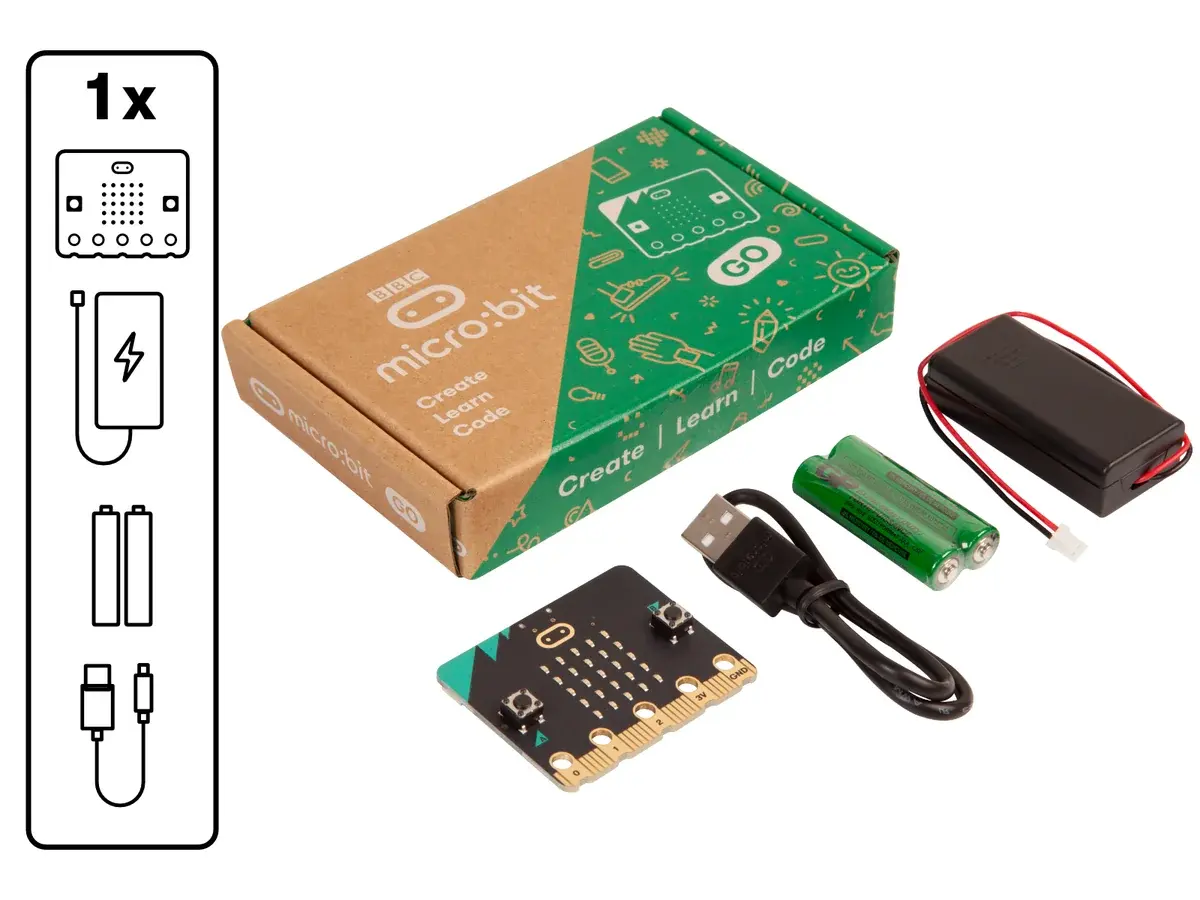
    The BBC micro:bit Go is the official starter pack for the micro:bit V2, a pocket-sized computer that shows students how software and hardware work together. It is designed for beginners and gives a confidence-building first step into coding and physical computing. The micro:bit V2 board has an LED display, programmable buttons, built-in sensors, a speaker and a microphone, plus pins for connecting other inputs and outputs. The Go pack includes one micro:bit V2 board (supplied in one of four colours), a micro USB cable, a battery holder with two AAA batteries, a quick-start guide, a safety leaflet and a sticker. Students write programs on a computer, tablet or phone and transfer them to the board. Once the code is loaded, the micro:bit runs on its own from the battery pack, so projects can be carried around or built into models. The Micro:bit Educational Foundation offers free block-based and text-based editors along with curriculum-linked lessons and teacher training, making it easy to use in class.

  • Grades 4–5Grades 6–8

    Nezha Inventor's Kit V2 for micro:bit

    The ELECFREAKS Nezha Inventor's Kit V2 turns a BBC micro:bit into the controller for motorised, sensor-driven models. Built around ELECFREAKS' Planet X sensor modules, it combines electronics with construction so students design, build and program working inventions. At the heart of the kit is the Nezha expansion box, which offers four servo ports and four motor ports and runs on a rechargeable battery. The kit includes sensor modules such as LEDs, a potentiometer, a soil moisture sensor, an ultrasonic distance sensor, a crash sensor and a line-tracking sensor, along with TT motors, a 360-degree servo, wheels, gears, RJ11 cables, a line-following map and more than 400 building blocks. RJ11 anti-reverse connectors make wiring quick and reduce mistakes. The kit comes with 32 themed project cases that progress from guided builds to open-ended invention. It can be programmed with MakeCode blocks, JavaScript or Python, and its parts are compatible with LEGO and Fischertechnik elements. A micro:bit board is not included and must be purchased separately.

  • Grades 6–8Grades 9–12

    Raspberry Pi 5

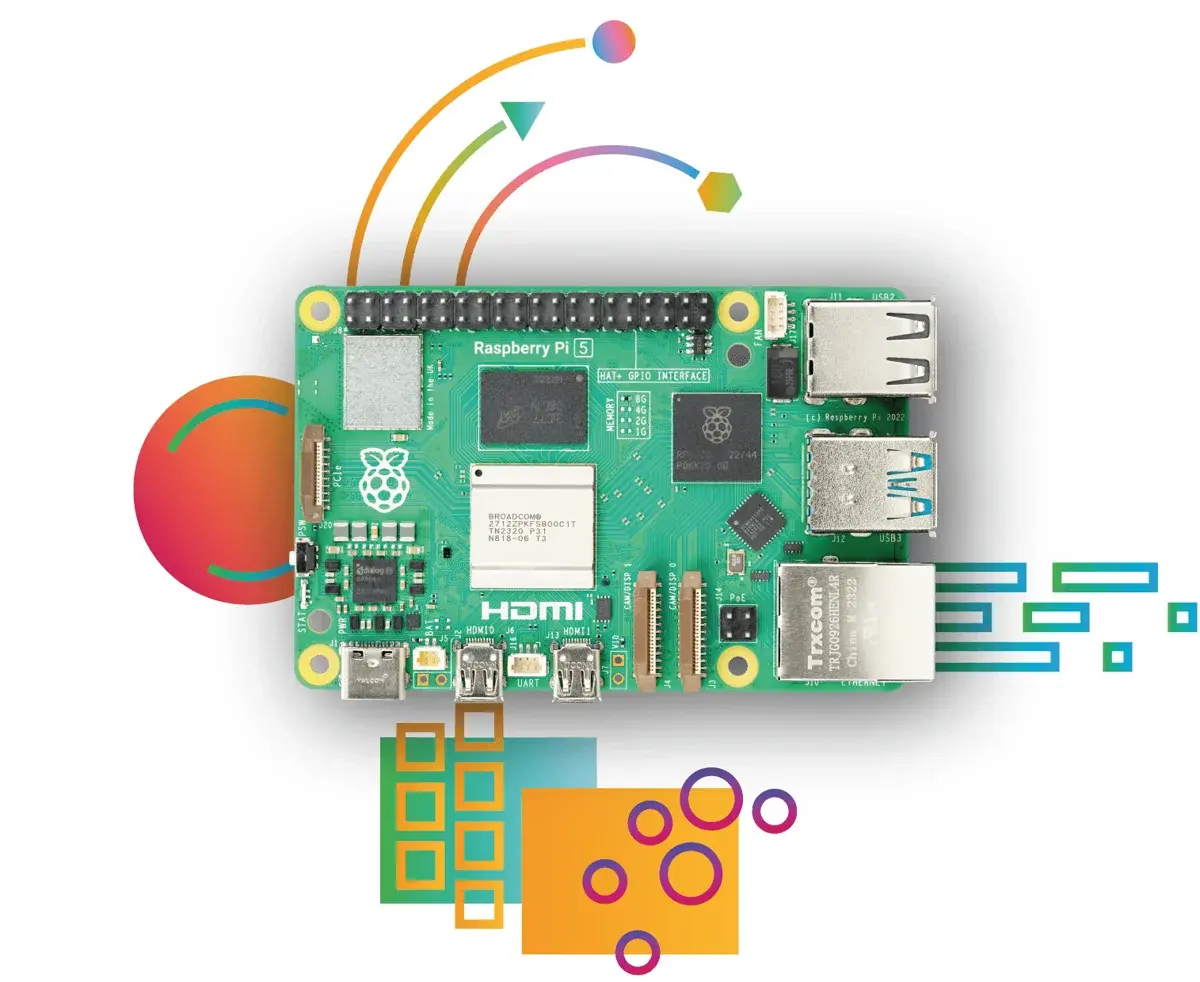
    Raspberry Pi 5 is a full computer on a single small board, offering two to three times the performance of the previous generation. With 8GB of RAM it can run a desktop operating system, programming tools and more demanding projects, while its GPIO header lets students connect it directly to electronics. It uses a Broadcom BCM2712 quad-core 64-bit Arm Cortex-A76 processor at 2.4GHz and a VideoCore VII graphics processor. Connectivity includes two 4Kp60 HDMI outputs, two USB 3.0 and two USB 2.0 ports, Gigabit Ethernet, dual-band Wi-Fi and Bluetooth 5.0. It also offers two camera/display connectors, a PCIe 2.0 interface for fast storage, a microSD slot, a real-time clock, a power button and a 40-pin GPIO header. It is powered through USB-C. In school, Raspberry Pi 5 can serve as a low-cost computer for learning programming, as a platform for physical computing with sensors and motors, or as the basis for camera, networking and AI projects.

Need a full classroom or lab?

We build bundles for 24–30 students with storage and charging, and can install and train your teachers.

Talk to us